
Driving Your Future Forward with a CDL Training Program in US
A career in professional truck driving is not something you simply step into it is built through structure, discipline, and real-world experience. Today’s Commercial Driver’s License (CDL) training programs have changed how new drivers enter the industry, replacing uncertainty with clear guidance and practical skill development.
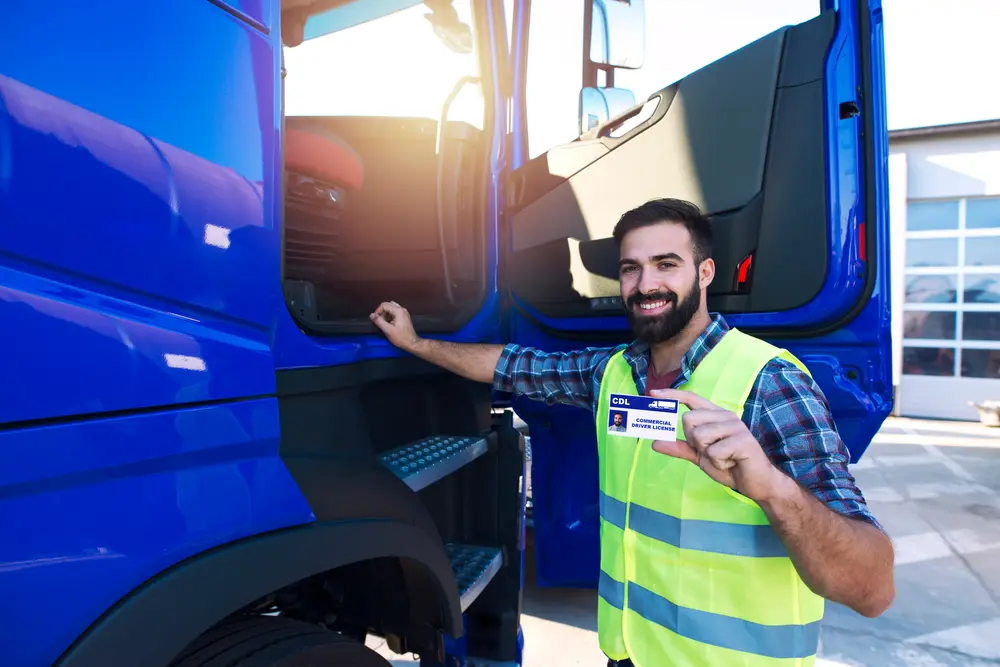
Why CDL Training Is the Gateway to a Professional Driving Career
Driving a commercial truck requires more than basic driving ability. It demands technical knowledge, situational awareness, and a strong understanding of safety and regulations. Modern CDL programs are designed to prepare students not just to pass a test, but to succeed on the road long after licensing.
The best training programs treat CDL education as professional preparation not a shortcut to a license. Students are guided step by step, building confidence through structured learning and supervised practice.
What Makes a Strong CDL Training Program
Although CDL schools vary in length and format, reputable programs in the U.S. generally follow a similar progression. Each phase is designed to build skills gradually and responsibly.
Phase One: Vehicle Knowledge and Safety Responsibility
Training begins with understanding the truck itself. Students learn how to perform thorough pre-trip inspections, identify critical components, understand air brake systems, and check coupling and safety equipment.
This phase emphasizes accountability. Drivers learn early that safety starts before the truck ever moves.
Phase Two: Hands-On Skills in a Controlled Environment
Once the basics are understood, students move to closed training ranges. Here, they practice essential maneuvers such as straight-line backing, offset backing, alley docking, turning, and lane control.
Mistakes are expected and corrected in a safe setting. This allows students to develop spatial awareness and control without the pressure of traffic.
Phase Three: On-the-Road Driving Experience
After mastering range skills, students transition to public roads under instructor supervision. This stage introduces real-world conditions traffic flow, intersections, highway driving, lane changes, and defensive driving techniques.
This is where classroom knowledge becomes practical experience and confidence starts to develop.
Phase Four: CDL Exam Preparation and Professional Habits
The final stage focuses on preparing for state CDL written and skills tests. At the same time, instructors reinforce habits that will matter long after the exam safe decision-making, attention to detail, and compliance with regulations.
Practical Strategies for Training Success
Excelling in a CDL program requires more than showing up. Successful trainees treat training like a professional commitment.
Memorize the Pre-Trip Inspection Early
The
inspection is one of the most common failure points. Repetition, verbal
practice, and visualization help turn checklists into muscle memory.
Understand Trailer Geometry
Backing
a trailer defies intuition. Learning how small steering inputs
translate into large trailer movements is a mental skill as much as a
physical one.
Learn From Instructors’ Experience
Instructors
are often former long-haul or regional drivers. Their real-world
stories offer insight into scenarios no manual can fully explain.
A Real-Life Career Transition
Daniel, a former warehouse supervisor in Arizona, spent years in physically demanding work with limited growth opportunities. Looking for a more stable future, he enrolled in a CDL training program.
“At first, the truck felt overwhelming,” Daniel said. “Once I understood how everything worked, it became less intimidating and more about precision.”
After earning his CDL, Daniel moved into a regional driving position. His income increased, and he gained more predictable home time. For him, CDL training wasn’t just about learning to drive it was a complete career reset.
Common Challenges New Drivers Face and How to Avoid Them
Even strong trainees can stumble if they overlook key aspects of the transition.
Range Confidence vs. Real-World Complexity
Controlled environments don’t replicate crowded docks or tight truck stops. Staying cautious and adaptable is critical.
Regulatory Oversight
Electronic logs and Hours of Service rules are non-negotiable. Mastery of compliance is as important as vehicle control.
Physical and Mental Fatigue
Driving demands endurance. Establishing healthy sleep routines and nutrition habits during training pays long-term dividends.
Technology in Today’s Trucking Industry
Modern trucks are equipped with advanced technology, and CDL programs now introduce students to these systems early in training. Drivers learn to work with:
Collision mitigation systems
Lane departure warnings
Adaptive cruise control
Fuel efficiency and performance monitoring tools
These systems improve safety, but they do not replace the driver’s judgment. Training emphasizes how technology assists rather than controls the driver.
Choosing Between Independent Schools and Carrier Programs
Prospective drivers typically choose between independent CDL schools and carrier-sponsored training programs. Each option serves different needs.
Feature | Independent CDL School | Carrier-Affiliated Program |
|---|---|---|
Upfront Cost | Typically higher | Often reduced or sponsored |
Equipment | Varies by school | Standardized fleet |
Job Placement | Self-directed | Often built-in |
Focus | Licensing | Career integration |
The right choice depends on finances, learning preferences, and career goals.
Long-Term Stability in the Trucking Industry
Despite economic changes, trucking remains essential. Food, medical supplies, construction materials, and consumer goods all depend on reliable drivers. Industry data consistently shows that demand for qualified CDL drivers exceeds supply.
While automation continues to advance, real-world driving conditions weather, traffic, loading docks, and customer interaction—still require human skill and judgment. Professional CDL training remains one of the most dependable entry points into the workforce.
Final Thoughts: Starting Strong from the First Mile
A trucking career doesn’t begin with the first delivery it begins with proper training. Investing in a structured CDL program builds confidence, safety awareness, and professional discipline.
The road rewards preparation, not shortcuts. For those willing to commit to learning the right way, CDL training opens the door to a stable, respected, and in-demand career.
The horizon isn’t far it’s waiting for drivers who are ready to earn it.
Recent
News




Newsletter
Subscribe to our mailing list to get the new updates!

Subscribe our newsletter to stay updated
Most
Reviews
Economy

Finance

Finance

- Wed, 21 Jan 2026
Trump dispute over Greenland derails Ukraine postwar deal
Finance

Finance

- Mon, 19 Jan 2026